Matt 7:13-14
Listen online HERE to the full podcast episode
May we not become too comfor-t-able and ignore the need of our lost neighbors, who think themselves wise, yet walk in darkness. May we testify that they need Jesus! Christ’s burden is light, His way is righteous. He came for the lost, to seek, save, and bless. There’s life and there’s hope for everyone since the Lord Jesus came to take away sin. Let this Truth be what we proclaim. This Truth sets captives free. Salvation found in Jesus Name, Lord help us to believe.
Navigating the Two Paths: An Anabaptist Reflection on Matthew 7:13-14
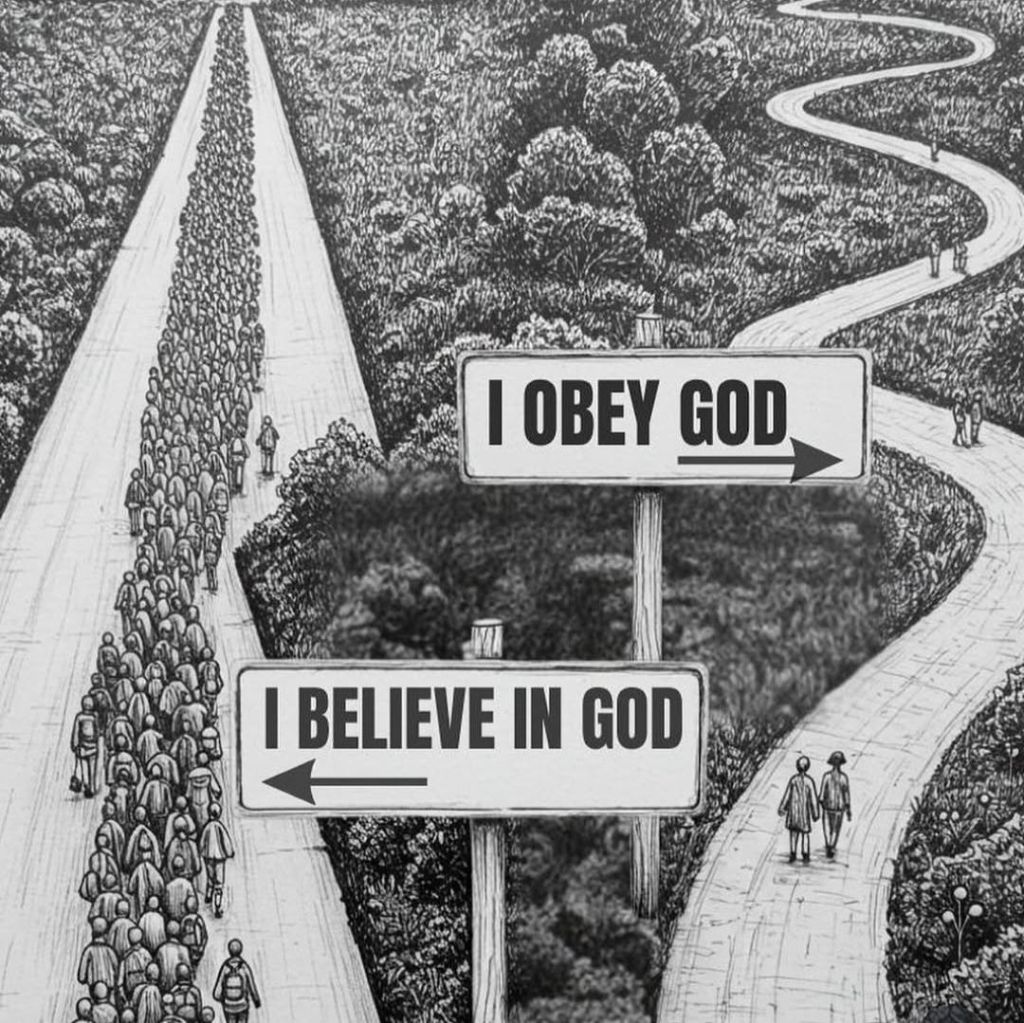
In the Sermon on the Mount, Jesus presents a stark choice between two ways of life, encapsulated in Matthew 7:13-14: “Enter by the narrow gate; for wide is the gate and broad is the way that leads to destruction, and there are many who go in by it. Because narrow is the gate and difficult is the way which leads to life, and there are few who find it.” This passage serves as a timeless call to discernment and discipleship. Drawing on historical figures like Menno Simons and Dirk Philips, our reflection warns against worldly compromises while urging believers toward a path of radical obedience. We are reminded of the perils of the broad way and the rewards of the narrow one.
The Broad Way: A Path to Destruction
Verse 13 vividly depicts the wide gate as an inviting portal to ruin, symbolizing ease and popularity that ultimately leads to spiritual death. From an Anabaptist perspective, this broad path embodies entanglements like church-state alliances, infant baptism, and dilutions of the Gospel through coercion. Dirk Philips is cited emphasizing that few find the true way, underscoring the rarity of genuine salvation amid widespread deception.
This motif traces back to Eden’s fall, where humanity opted for forbidden ease over divine command. It echoes through Noah’s flood, Israel’s idolatrous wanderings, and prophetic warnings against apostasy. Jesus echoes Deuteronomy 30:19’s choice between life and death, positioning Himself as the gateway to life. Anabaptists view this as a rejection of imperial religions, akin to the early church’s separation from Rome, advocating voluntary faith over forced conformity.
The verse highlights human depravity, as per Romans 3:23, where unregenerate hearts flock to sin. God’s sovereign grace elects the few, yet Anabaptist theology rejects fatalistic predestination, affirming free will in responding to the Gospel. Christ’s atonement is universal in sufficiency but applied through faith and obedience, steering believers from the broad multitude.
The broad way appears in corrupted institutions, from Constantine’s fusion of faith and empire to the Magisterial Reformers’ retention of infant baptism and persecution of dissenters. Early Anabaptists, facing execution, decried these as compromises. Menno Simons exemplified unyielding faith, promoting believer’s baptism as the authentic entry point, even tying it to themes like Holy Spirit baptism.
Believers must shun temptations like pursuit of wealth, violence in war, and societal conformity that undermine holiness. This translates to community living, nonviolence, and simple obedience—forgoing the sword, baptizing only upon the profession of faith in Jesus Christ, and fostering mutual aid to avoid drifting into destruction.
Skeptics question a loving God’s allowance of mass destruction. The response affirms divine justice requiring accountability for sin, yet with mercy offered through Christ. It refutes universalism—all paths do not lead to God—and legalism, emphasizing entry by grace through faith in Jesus as the True Gate (John 10:9). Lives of integrity amid persecution validate the Gospel’s cost. The exposition touches on modern phenomena like near-death experiences, hallucinations, and interdimensional awareness, suggesting many reject repentance, repulsed by heaven and choosing eternal misery.
The Narrow Way: A Difficult Journey to Life
Shifting focus, verse 14 portrays the narrow gate as a challenging yet glorious entry, akin to a needle’s eye, leading to eternal life. This path demands the cross: self-denial through believer’s baptism, nonviolent love, and separation from worldly vanities. Menno Simons urges walking this strait way for salvation.
Biblically, it culminates Scripture’s narrative, echoing Isaiah 35:8’s “highway of holiness” for the redeemed. It anticipates apostolic sufferings and Revelation’s diverse yet proportionally small multitude of saved. Anabaptists see it as imitating Christ’s humility (Philippians 2:8), rejecting idolatry for covenant community.
Woven together are soteriology and sanctification: faith justifies, but holiness evidences it. Eschatologically, it promises eternal life for perseverers (Revelation 21:7). The fewness highlights election’s mystery alongside human choice—corporate predestination for the church, with individual free will determining inclusion.
This way is marked by martyrs’ blood, from early Christian catacombs to Anabaptist executions in rivers like the Limmat. Suffering is endured not merely for Christ, but with Christ. The 16th-century Anabaptist heritage, amid Reformation compromises, embodies this resilience through Menno’s rallying writings.
We must embrace the difficulty: persecution for peace, simplicity over luxury, accountability over individualism. Baptize those who count the cost, teach nonviolence as Christ’s mandate, and disciple in everyday settings. Lives become living sermons, finding joy in Christ’s light yoke through trust in our Savior.
Doubters ask why few are saved if God wills all to be saved (1 Timothy 2:4). The answer lies in human rebellion against divine desire—salvation isn’t forced. Peaceful Anabaptist communities amid chaos demonstrate choosing the narrow way, rejecting worldly glory for heavenly treasure. Temporary pains yield eternal rewards.
Choose This Day: A Call to Action
In conclusion, the exposition implores us to choose this day who we will serve. The broad road tempts with crowds but ends in ruin; the narrow gate, through Christ, offers discipleship’s joy despite hardship. Standing with Menno and Philips, believers tread this path for the Kingdom, seeking by grace to be among the few who find eternal life.
This Anabaptist lens on Matthew 7:13-14 challenges modern Christians to reject compromise and embrace costly faith, reminding us that true life lies beyond the ease of modern conformity.

 The New Anabaptist Church